

Buying into an HOA means vetting its finances as carefully as the unit itself — ask how insurance is funded, how healthy the reserves are, and who has each answer. Check the area's risks first so your questions target the right threats.
You've found the unit — good layout, right price, maybe even a view. What you haven't checked yet is whether the HOA behind it can actually afford to keep the building insured, maintained, and out of a surprise bill. That's a different kind of due diligence than a home inspection, and most buyers don't know where to start.
What Should You Ask the HOA About Insurance and Reserves?
Four questions matter most before an offer goes in: how the building's master insurance policy is funded, what it excludes, how the reserve fund compares to what an actual reserve study says is needed, and whether a special assessment is already being discussed.
One climate-specific wrinkle worth separating out here: a special assessment triggered by a post-event insurance premium spike isn't just a one-time bill — premiums driven up by rising reinsurance costs and repeated catastrophe losses tend to stay up rather than fall back, industry sources consistently note. That's why checking the insurance coverage itself, and tying it back to the property's local climate risk, matters as much as checking the assessment history. A single "reasonable" event-driven assessment can still be an early sign that HOA fees are heading permanently higher.
These aren't paranoid questions — they're the same thing a mortgage underwriter already checks. Fannie Mae maintains a list of HOAs flagged for insufficient reserves or other red flags, currently covering more than 1,400 associations nationwide, and won't back a loan on a unit in one of them without extra scrutiny. The list itself isn't public — a board, property manager, or lender can check a specific building's status through Fannie Mae's Condo Status Finder tool, but a buyer can't look it up directly. Still, if a lender is already screening for this, asking the same questions upfront isn't overdoing it — it's catching the problem before it derails financing later.
Fannie Mae flags more than 1,400 HOAs nationwide for insufficient reserves or other financial red flags
Who Has the Answer to Each Question?
Each question above has a specific source, not a single generic "call the HOA" contact.
The master insurance policy and what it covers — the HOA's management company can usually provide a certificate of insurance and the policy's declarations page on request.
How healthy the reserves are — the reserve study itself, a periodic engineering-based analysis of what major systems (roof, elevators, plumbing) will cost to repair or replace and when. Check its date; a reserve study from six years ago tells you less than one from last year.
Whether a special assessment is coming — board meeting minutes, which often discuss funding shortfalls or planned repairs months before an assessment is formally voted on.
The full financial picture, packaged together — in many states, sellers are required to provide an HOA disclosure packet that bundles recent minutes, the budget, and the reserve study into one document before closing.
Rising HOA fees are often the visible symptom of exactly the strain these documents would have shown earlier. Vantaca's platform data puts real numbers on that pattern: the typical monthly assessment on condos built before 2000 has more than doubled in five years, while special assessment rates have climbed roughly threefold over the same stretch — worth asking directly whether recent increases reflect one-time costs or an ongoing trend.
What Happens If the HOA's Reserves Fall Short?
A special assessment — a real, sometimes enormous, one-time bill split across every owner when reserves can't cover a needed repair.
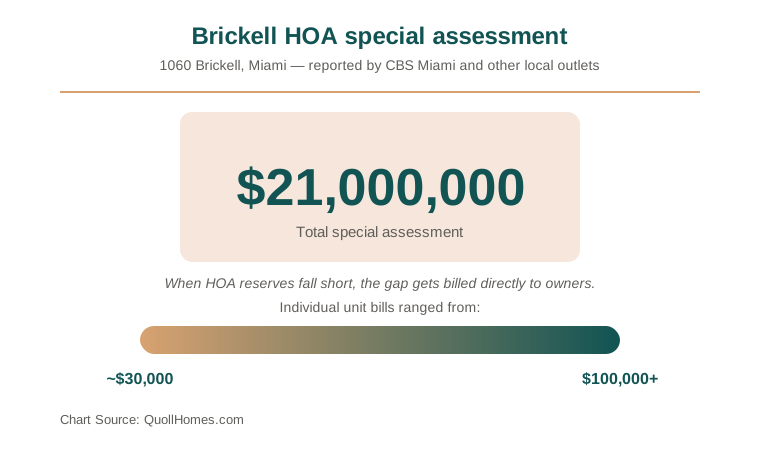
A Brickell, Florida building's owners faced a $21 million special assessment, with individual unit bills ranging from roughly $30,000 to over $100,000 — a concrete sense of scale for what "underfunded reserves" can mean in dollars, not just a warning phrase. (Reported by CBS Miami and other local outlets.) The consequences don't stop at the one-time bill, either: in South Florida specifically, 30-year-plus condos have lost roughly a fifth of their value within a single year, a pattern tied directly to deferred maintenance and the special assessments that follow it.
Two checks can help gauge how well-run a specific HOA has been before an offer goes in. First, ask directly whether the association has had special assessments or reserve shortfalls before. Second, ask the HOA management company, board, or your lender to run the building through Fannie Mae's Condo Status Finder tool — this isn't something a buyer can look up independently, since the list itself isn't public, but a board, property manager, or lender can check it. A flag there is outside confirmation, not just the seller's account, that reserves or insurance are already a documented concern.
Not every special assessment is a red flag, though — a single, event-driven assessment (say, after a hurricane season) is a different situation than a repeated pattern of assessments for routine maintenance the HOA should have budgeted for. A companion post on special-assessment warning signs goes deeper on how to tell the two apart.
Frequently Asked Questions
What questions should I ask an HOA before buying?
Ask how the master insurance policy is funded and what it excludes, how the reserve fund compares to what the reserve study says is needed, and whether a special assessment is already being discussed.
Who do I ask about an HOA's reserve fund and insurance coverage?
The management company can usually provide the insurance certificate; the reserve study itself has the funding analysis; board meeting minutes often reveal an assessment before it's formally voted on. Local climate risk matters here too — knowing whether the property faces heavy wildfire, flood, or wind exposure is what lets you judge whether the HOA's coverage actually matches those risks, not just whether a policy exists at all.
What happens if I buy into an HOA with a special assessment coming?
The cost gets split across every owner, sometimes running into the tens of thousands of dollars per unit — and it can hit shortly after closing if the assessment was already being discussed before the sale.
How can I tell if an HOA is financially healthy before I buy?
Check whether the reserve study is recent and whether its funding recommendations are actually being followed, not just whether one exists — an outdated or ignored reserve study is close to not having one at all.
What to Do Next
Run a free risk analysis on the specific address at QuollHomes.com first. Knowing the property's actual local risks — wildfire, flood, wind, and so on — sharpens which of these HOA questions matter most for this specific building, rather than working from a generic checklist alone.
Related reading:
Special Assessments 101: Warning Signs to Spot Before You Buy Into an HOA — internal link pending, not yet live
Reading Your HOA's Reserve Study After You've Closed — internal link pending, not yet built