
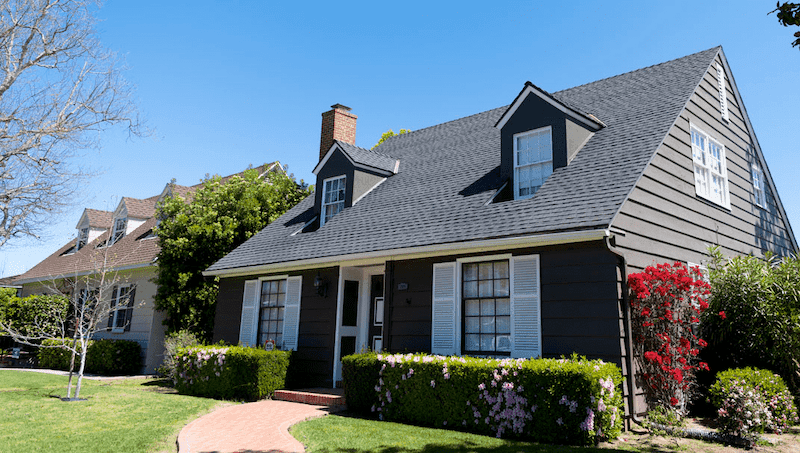
A home inspection tells you the current condition of what's already on a house — not whether it's built to handle the property's specific climate risk. Before inspection day, know the wildfire, wind, or hail exposure at that address, then bring targeted questions to the inspector before they start. Afterward, that window closes.
If you've got an inspection scheduled on a house you're serious about, it's easy to treat it as the finish line on due diligence — the professional check that tells you everything you need to know. It doesn't. An inspector is there to report what condition things are in, not to judge whether they're the right things for where the house sits. Closing that gap is on you, and it only works if you do it before the inspector arrives, not after.
What Does a Standard Home Inspection Actually Check?
A standard inspection documents the current, visible condition of a home's systems and components — not their age, history, or how well suited they are to whatever hazard the property actually faces.
Home inspectors work from a defined standard, and it's narrower than most buyers assume. Both major certifying bodies — the American Society of Home Inspectors (ASHI) and the International Association of Certified Home Inspectors (InterNACHI) — require an inspector to describe a roof's material type and note problems like active leaks in the written report. Both also exclude the same two things from that report: age and adequacy. Neither standard requires an inspector to determine how old a system or component is or how much useful life it has left, and neither requires judging whether a component is adequate or effective for a particular use. InterNACHI's standard goes a step further, specifically excluding any requirement to tell original construction apart from a later replacement. Put together: nothing in a standard inspection tells you whether a roof, a vent, or a type of siding is actually a good match for a wildfire-prone, high-wind, or hail-heavy location. That's not an oversight. It's the boundary of what the inspection is built to answer.
Why Doesn't "Good Condition" Mean "Right for This Property's Risk"?
A feature can be in good condition and still be the wrong choice for the hazard the property faces — condition and adequacy are two different questions.
The Insurance Institute for Business & Home Safety (IBHS) put real numbers behind that distinction in its post-event study of the January 2025 Los Angeles County fires, The 2025 LA Conflagrations. IBHS found a clear split based on how many hardening measures a home had: homes outfitted with all four features it tracked — Class A roofing, noncombustible siding, double-pane windows, and enclosed eaves — avoided damage 54% of the time, while homes with just one of those four features avoided damage only 36% of the time. Separately, once vegetation or debris covered more than a quarter of the five-foot zone immediately around a house, the odds of damage or destruction climbed to nearly 90% — regardless of how tidy or well-kept that material looked. None of that shows up on an inspection report. A home can have a clean, well-kept roof and still be missing every feature that actually moves the odds in a wildfire zone — "well-maintained" and "built for this risk" aren't the same claim.
The same logic holds outside wildfire country. Impact-rated roofing and tested siding hold up differently in a hailstorm or a hurricane than materials that simply meet code — but a standard inspection isn't set up to tell the two apart. It reports what's there and whether it's currently functioning, not whether it was the right call for this address.
What Should You Do Before Inspection Day — Not After?
Check the property's climate risk profile first, turn it into two or three specific questions, and hand those to the inspector before they begin — once they've moved on, there's no formal way to go back.
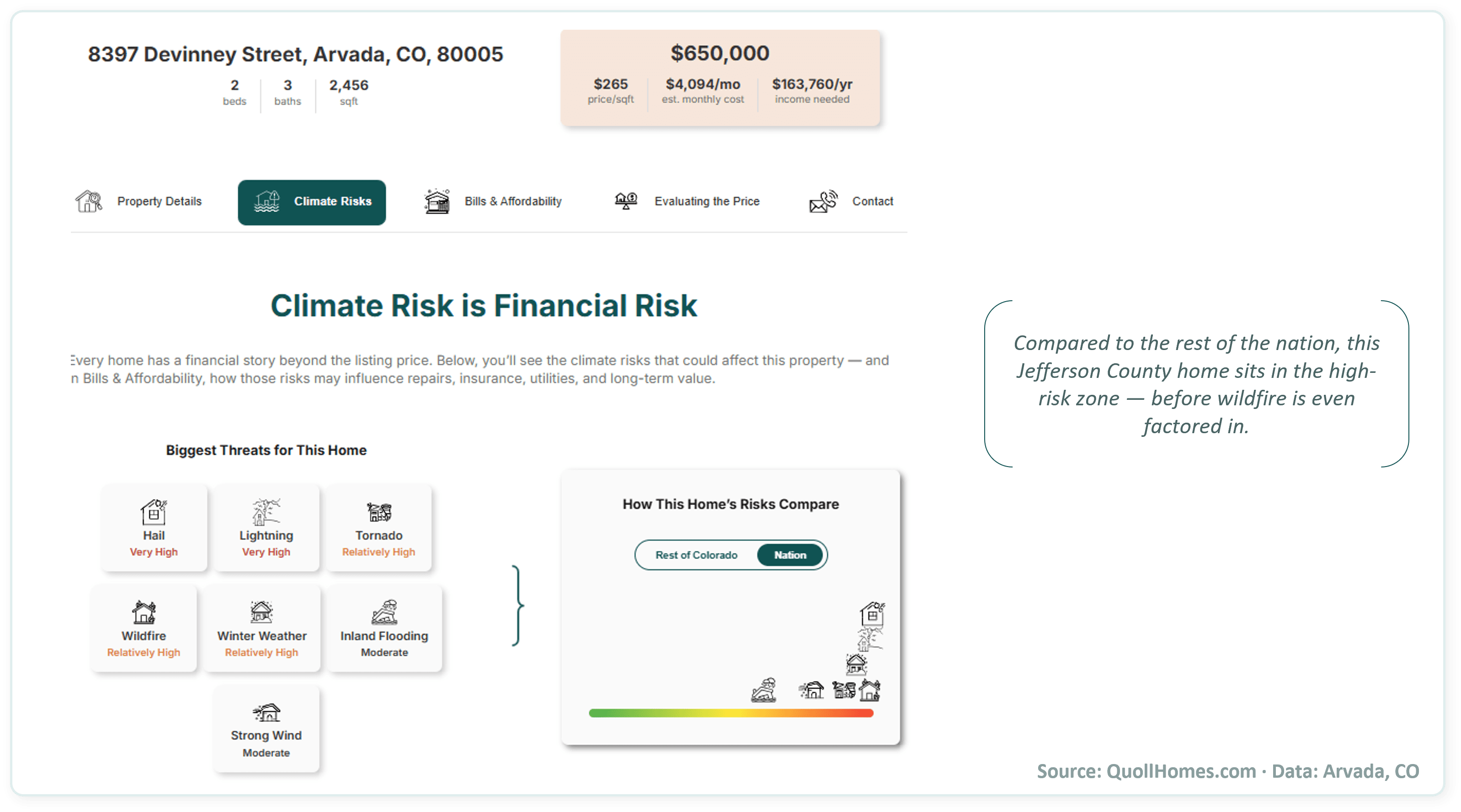
Every listing on QuollHomes.com already shows the climate risks tied to that address — wildfire, wind, hail, and more — before an inspection ever gets scheduled. That's the piece most buyers skip: they know the general area has "some risk," but they never translate that into anything concrete enough to actually ask about. If the address is flagged for wildfire exposure, the useful question isn't "how's the roof?" — it's "what's it made of, and is it Class A rated?" In a hail market, ask about impact rating before the inspector's on the ladder, not after the report's already back.
For a deeper look — a full checklist of resilience projects tailored to that address, not just its risk category — buyers can also run the address through GetQuoll.com's search bar. It's free, and built primarily for homeowners managing a property they already own, but nothing stops a buyer from using it to get a head start before closing.
Timing is the part that's easy to skip. Once an inspector has already assessed the roof from the eaves or signed off on the electrical panel, there's no formal mechanism to reopen that finding just because a better question occurred to you afterward — the report reflects what they were asked to look for, not what you wish you'd asked. A five-minute look at the risk profile before the appointment turns "I hope it's fine" into a specific answer, while there's still time to get one.
Search your target property at QuollHomes.com to see its climate risk profile before the inspection is scheduled.
Frequently Asked Questions
Does a home inspection cover climate risk?
No. A standard inspection reports the condition of what's installed — not whether it's suited to a property's wildfire, wind, or hail exposure. That's a separate question, and the standards inspectors work from explicitly don't require them to answer it.
What should I ask a home inspector about climate risk before they start?
Ask about the feature tied to the property's particular risk — roof material and fire rating in a wildfire zone, impact rating in a hail zone — before the inspector begins. The standard report won't raise it unprompted.
Can I ask an inspector questions before the inspection, or only after I get the report?
Before, if it matters. Once an inspection is complete, there's no formal process for the inspector to revisit a system because a new question came up afterward — the report reflects what they were asked to look at, not what wasn't.
Where can I find a property's climate risk before scheduling an inspection?
QuollHomes.com shows the risk profile — wildfire, wind, hail, and more — on every listing. GetQuoll.com's address search goes deeper, with a full checklist of resilience projects for that property.
Related reading:
How Do You Check a Property's Climate Risk Before You Make an Offer?
How to Pull and Read a Property's Insurance Loss History (CLUE Report) Before You Bid — internal link pending, not yet built