

You can't pull a property's CLUE report yourself — only the current owner can request it. But asking the seller to share theirs, before you offer, turns a late claims-history surprise into an early, priced-in decision. Repeated water, wind, or fire claims are usually a climate-driven pattern, not general wear and tear.
You've found a property you're ready to offer on — you've checked the neighborhood, maybe walked the listing twice. But there's a record most buyers never think to ask for: the property's own history of insurance claims. It's not on the listing, and it won't show up on a standard inspection.
What Is a CLUE Report, and Why Does It Matter for a Home You're Buying?
A CLUE report is a seven-year record of a property's actual insurance claims — and increasingly, that record is climate-event-driven, not just general wear and tear.
LexisNexis's Comprehensive Loss Underwriting Exchange (CLUE) tracks up to seven years of home insurance and personal-property claims tied to a specific address — water damage, wind, fire, theft, liability. Insurers pull it before quoting a policy, because claims history is one of the strongest predictors of future claims. And the pattern in that history is shifting: claims tied to wildfire, wind, and water events are becoming a bigger share of what shows up, not general age-related wear and tear. That's exactly the kind of surprise that's now killing deals. The California Association of Realtors' 2024 Annual Housing Market Survey found 13% of agents had a transaction fall out of escrow specifically over insurance issues that year, and separately, about 21% of agents said their clients ended up covered through the state's FAIR Plan, its insurer of last resort. Both numbers point the same direction: insurance trouble isn't a footnote anymore, and a property's claims history is one of the clearest early signals of it.
How Do You Actually Get a Property's CLUE Report Before You Offer?
You can't request a CLUE report on a property yourself — only the current owner can. So the move is asking the seller to share theirs, early, rather than waiting for underwriting to surface it after you're already committed.
This trips up most buyers, because a CLUE report isn't a public property record — it's a personal consumer report, and under the Fair Credit Reporting Act, only the person it's about (here, the property's current owner) can request it. The ask has to go through the seller. In practice, that means building it into your offer or your inspection period: ask the seller to pull and share their own report before you're locked in. There's no real cost barrier to that — the FCRA entitles the owner to one free copy every 12 months, so it costs them nothing but a phone call or an online request. If a seller resists sharing it, that reluctance is itself worth asking about.
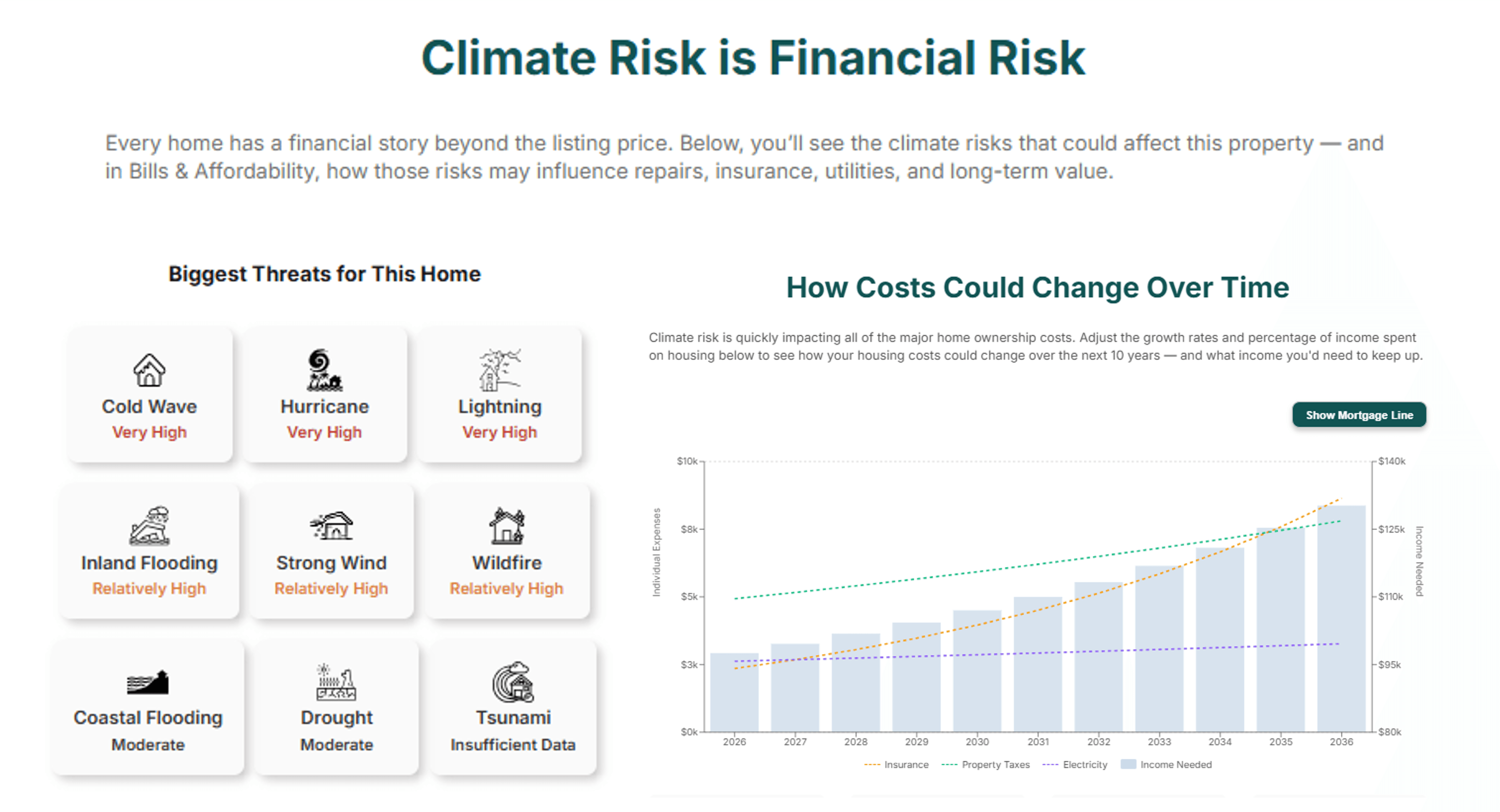
This is also where Quoll fits in, without duplicating the CLUE report: QuollHomes.com's risk and cost view for a specific address is forward-looking — what a property is exposed to, based on location and hazard data — while a CLUE report is backward-looking, what's already happened there. Checking both gives you the fuller picture: what's already occurred, and what's still coming.
What Should You Actually Look For Once You Have It?
Repeated claims of the same type — especially water, wind, or fire — matter more than any single old claim. That's the pattern insurers price against, and it's worth reading for the same reason.
A single eight-year-old claim for a burst pipe isn't much of a signal on its own. A pattern of three water claims in five years is. When you're reading a CLUE report, weight frequency and type over any one individual entry: repeated claims of the same kind point to a recurring exposure at that specific property, not a one-time accident. Pay close attention to whether an insurer non-renewed the policy after a claim — that's often a stronger red flag than the claim itself, since insurers rarely walk away from a policy without a real reason. And when the claims cluster around climate-typed events — wildfire, wind, flood — treat that as a forward-looking signal, not just a historical one: a property that's already generated those claims is statistically likely to keep generating them.
A CLUE report tells you what's already happened to a property. Before you offer, ask the seller for theirs — and pair it with the risk and cost view already on QuollHomes.com for that address to see what's likely to happen next.
Frequently Asked Questions
Can I request a CLUE report on a house I don't own yet?
No — only the current owner can request it. As the buyer, your move is asking the seller to pull and share their own copy, which the FCRA entitles them to for free once every 12 months.
What's the difference between a CLUE report and a home inspection?
A home inspection assesses the property's current physical condition. A CLUE report is a claims history — what's been submitted to an insurer over the past seven years, regardless of whether it shows up in an inspection today.
What counts as a red flag in a property's claims history?
Repeated claims of the same type (especially water, wind, or fire), and any non-renewal by a previous insurer after a claim — typically a stronger signal than the claim itself.
Related reading:
How Rising Insurance Costs Are Quietly Changing Mortgage Qualification
Roof Age, Defensible Space, and Other Underwriting Details That Can Sink Your Insurance Quote — internal link pending, not yet built